
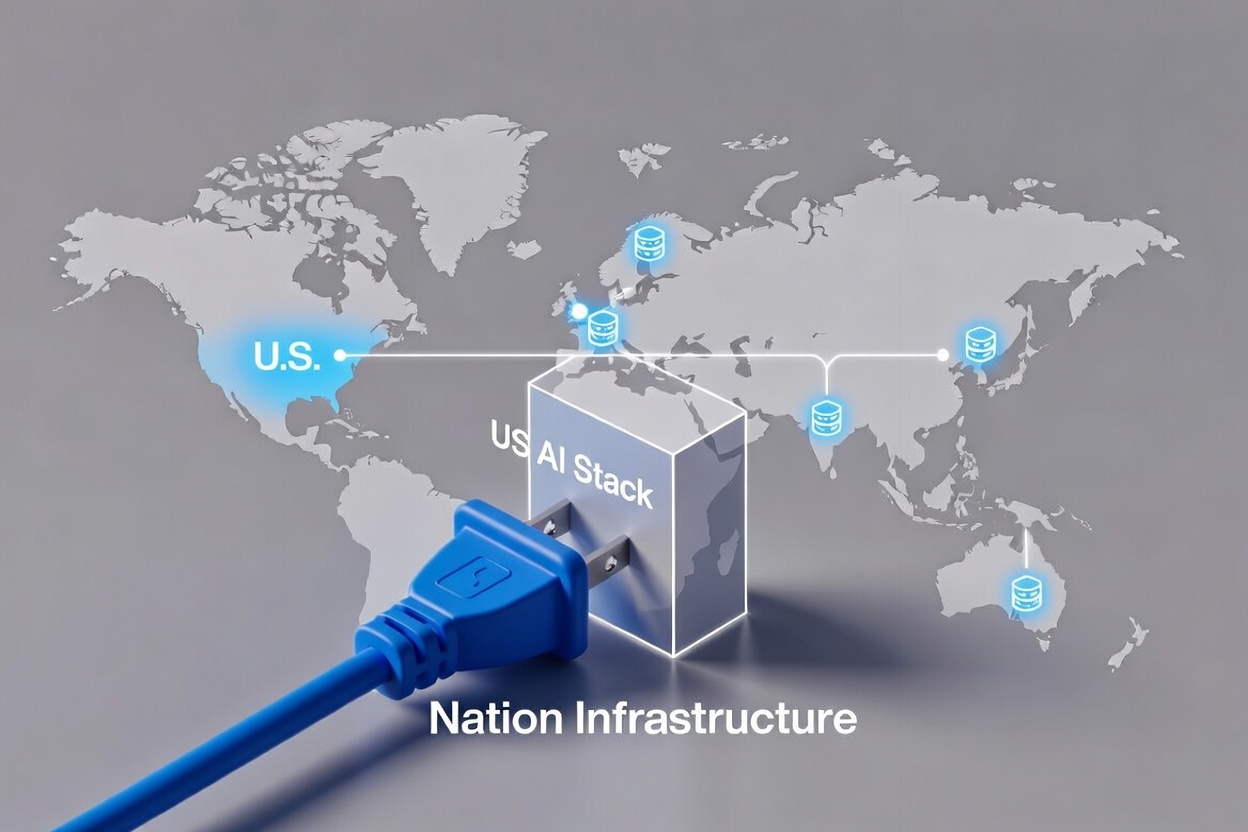
The United States is preparing to enter a new phase in its strategy to globalize American artificial intelligence technologies. Beginning on April 1, the U.S. Department of Commerce will open a 90-day window for industry-led groups to submit proposals for the administration's ambitious AI export initiative. The program aims to bundle the core components of the AI ecosystem — hardware, data infrastructure, models, cybersecurity and applications — into ready-to-deploy systems for allied and partner countries.
AI is becoming a strategic industrial policy tool.
A Structural Shift in U.S. Technology Policy
From an investment perspective, the initiative reflects a broader structural shift in U.S. technology policy. Rather than focusing solely on regulating exports or restricting rivals, Washington is increasingly seeking to actively shape the global AI ecosystem by exporting integrated technology stacks built around American companies and standards.
The program's architecture illustrates this shift clearly. Proposals will be invited either for comprehensive "full-stack" AI packages capable of operating across the entire technological chain, or for tailored systems developed in response to specific opportunities identified by the U.S. government abroad. Selected proposals may benefit from a range of federal support mechanisms, including expedited export licensing, access to U.S. credit programs, diplomatic backing and coordinated interagency assistance.
The U.S. is exporting entire AI ecosystems, not just technology.
In practical terms, the initiative represents an attempt to scale the U.S. technological ecosystem internationally. Rather than exporting individual products such as semiconductors, software platforms or cloud services, Washington is encouraging the creation of integrated AI infrastructures that can be deployed by allied governments and strategic partners.
Military Innovation Accelerating Commercial AI Growth
Recent geopolitical developments have also underscored the depth of U.S. technological capabilities in this domain. Military operations have increasingly demonstrated the advanced integration of artificial intelligence within American defense systems, from data analysis and targeting processes to operational planning. While the context of such conflicts remains deeply tragic, history consistently shows that many major technological breakthroughs originate in military environments before transitioning into civilian and commercial applications.
For investors, this dynamic has long been familiar. Technologies developed within defense ecosystems — including the internet, GPS and advanced computing architectures — have historically generated powerful spillover effects across civilian industries. Artificial intelligence may represent the next major wave of this pattern.
What This Means for Investors
The administration's export strategy therefore serves not only geopolitical objectives but also economic ones. By encouraging allied countries to adopt AI infrastructures built around American hardware, models and cybersecurity frameworks, the United States is effectively expanding the market reach of its domestic technology sector.
If successfully implemented, the initiative could accelerate demand across multiple segments of the AI value chain, including advanced semiconductors, data-center infrastructure, cloud computing and specialized software applications.
Washington's AI strategy is moving beyond containment of technological rivals and toward active ecosystem expansion. The coming months will test whether the United States can translate this vision into a scalable export model capable of shaping the next phase of the global AI economy.